Why Are Old Certificates Sometimes Harder to Verify?
attestation services in dubai of certificates
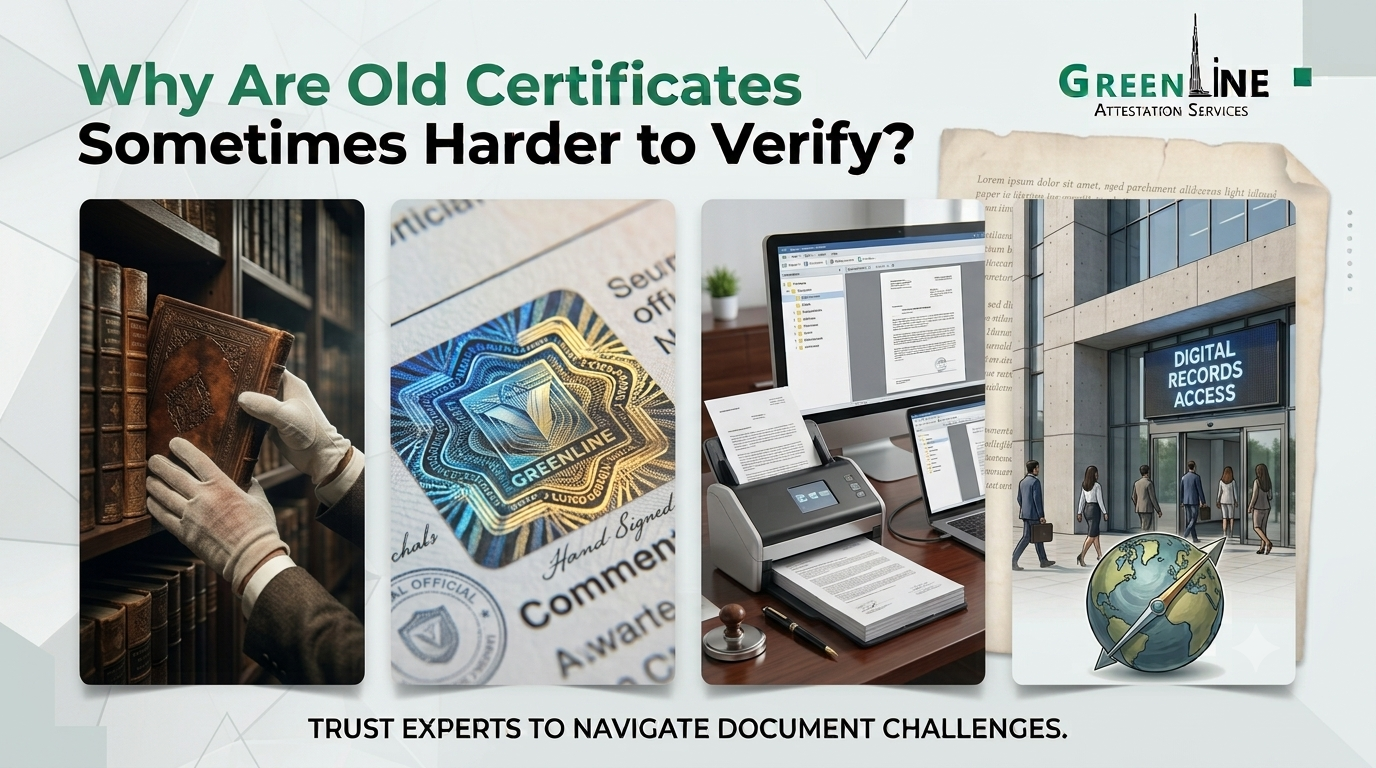
An old certificate may remain legally valid but may also be more difficult to verify than one that was recently issued. People find themselves in this situation when they have to use such certificates in various instances.
It is not necessarily the age of the certificate itself. A document that was created many years ago is still valid as a result. However, locating and verifying those documents may be more challenging for the authorities and institutions involved in such situations.
For people arranging certificate attestation in Dubai or looking to validate foreign-issued documents for official use, it is needed to understand why some of these certificates might require extra attestation from the UAE authorities.
Why is the age of the certificate important during verification?
The process of verifying a document typically relies upon the ability of the issuing institution to verify the information contained within the certificate.
In some instances, this information is also available in the digital records of the institutions that created those documents.
The documents you requested may have been issued at a time when the documents were maintained in a different way. For instance, the college may have stored their students’ academic records physically rather than digitally, so those documents are not available online.
These certificates can complicate the process of verifying their authenticity.
1. Older Records May Not Be Available Digitally
The keeping of digital records has changed significantly over the years.
These databases contain all of the necessary information about students who attend these schools. However, the certificates that were issued to those students many years ago did not exist at the time when those databases were created.
As a result, older information may be stored in:
- Physical archives
- Paper files
- Historical registers
- Older computer systems
- Separate departmental records
- Off-site storage facilities
If an old certificate is presented for verification, the institution may require extra time to locate the necessary records.
One of the reasons why a newer certificate and an older certificate from the same institution may not follow the same verification timeline is because of the differences in the requirements for verifying each certificate.
2. The Issuing Institution May Have Changed Its Name
The names of educational institutions can be changed over time.
A university can be renamed, merged with another university, restructured or brought under the authority of a new administrative body.
If an old certificate displays the name of the institution that it was issued from, the receiving authority must investigate the relationship between the institution with the old name and the current institution with the new name.
For instance, the name printed on an old degree certificate may not match the name that is displayed on the official website of the institution that awarded the degree.
While this does not necessarily show a problem with the certificate, it may require further investigation to confirm the connection between the historical institution and the present-day identity of the institution.
3. Universities and Colleges May Have Merged
Institutional mergers may require extra verification questions.
In some cases, a university has absorbed another college, merged with another institution altogether or reorganized its academic departments.
In these cases, the academic records of students who completed their studies prior to the implementation of the digital system are often no longer managed by the office that originally issued their certificates.
The records could have been transferred to:
- A successor institution
- A central university archive
- Another education authority
- A government department
- A specialized records office
Finding the correct authority responsible for the historical records is therefore an important part of the verification process.
4. The Format of Old Certificates May Be Different
The document format changes over time.
Older certificates may have different:
- Logos
- Institutional names
- Signatures
- Registration numbers
- Security features
- Certificate layouts
- Official stamps
When comparing the old certificate to today’s example, there are some differences that might jump out at you. But a difference in design doesn’t mean your certificate is suddenly invalid! Just ask the receiving authority if they can confirm this document via their issuing authority or verification process.
5. Signatories and Officials May No Longer Be Available
In some cases, older certificates might have signatures by individuals that either retired from their position, switched roles within an organization, or just aren’t affiliated anymore.
This means the receiving authority needs to validate historical signatures (and related records), which could involve accessing archival organizational data—it isn’t always easy for everyone involved!
6. Records May Have Been Moved to Another Department
The applicant might also get into touch with the organisation where they obtained their certificate (eg the certifying institution) and find out that the relevant documents aren’t held within the same organisational unit as they were at the time of certification.
Historical examples include transfers between academic departments such as:
- Registrar’s office
- Examination department
- Archives department
- Records management office
- Central administration
Knowing where these records are maintained can also help prevent unnecessary delays.
This is of particular relevance to those applicants who are preparing documents for international use some years after having completed their education.
-
Older Documents May Contain Outdated Personal Information
Your personal data could have changed since you gave us some of that info, for example your name on an old academic certificate might be different to your current one on your passport.
This can happen because of:
- Marriage
- Legal name changes
- Different spelling conventions
- Use of initials
- Corrections to official records
If there are discrepancies between the information on your older certificate and documents you currently have, the authority where you’re submitting might need more documents to verify that they’re for the same individual.
Make sure to review and compare your certificates against your current ID documents prior to starting the verification/attestation process.
-
Some Older Certificates Were Issued Before Modern Security Features
Modern certificates may include security features such as:
- QR codes
- Digital verification systems
- Online registration records
- Security paper
- Electronic signatures
- Digital certificates
In some older documents you won’t find such features as they weren’t offered when they issued.
But this doesn’t make your document invalid automatically, but just verify more by your institution’s record instead of digital check.
-
The Institution May No Longer Exist
The educational institution that provided you with your education has closed.
If this is the case then we will be unable to verify your education if you are unable to tell us where your historical records were transferred. We may have been sent these records to another educational institution or they may still reside with an education authority
Don’t assume verification is impossible just because the institution itself isn’t operating anymore.
Once you have the name of the institution, you can search for the authority responsible for its historical records.
-
Damage and Physical Condition Can Create Problems
Older certificates may have been stored for many years and are physically damaged.
Common issues include:
- Fading
- Water damage
- Torn sections
- Missing information
- Discoloration
- Unclear stamps or signatures
But what if some crucial information can’t be read as clear?
So applicants must confirm that they are physically okay to submit these certificates for an official process.
Does Old Certificates Require Different Attestation Process?
Not necessarily!
While your certificate’s age might suggest a whole new (and probably longer) process for verification, you won’t always have to wait forever for an answer. Some organizations will take more time if they need to find their old records.
However, for those applying to do their certificate attestation in the UAE, there are several things you might have to consider based on several parameters:
Country of issuance
Type of document
- Issuing authority
- Intended purpose
- Receiving organization
- Availability of records
But remember that the age of this certificate affects the length of time to verify documents – however, there are other factors affecting such document processing.
What should you check before submitting an old certificate?
Read below carefully.
Check the Institution’s Current Status
Check if the institution still operates with this name.
Compare Personal Details
Make sure that your name and other relevant details are consistent with those on your current ID documents.
Inspect the Certificate
Make sure that all of your most important data remains visible, but don’t damage this document.
Identify the Correct Records Authority
Who currently maintains historical records for this former organisation?
Confirm the Receiving Authority’s Requirements
You can’t just assume that the age of the certificate will determine what documentation you need to provide.
Keep Copies
Make sure you have clear copies of your original certificate before submitting them for processing. When can translation come into play? For example, your certificate might be written in an older language which doesn’t work with the authorities’ system.
You may need to determine whether you require translation in these scenarios.
If you are looking for legal translation services in Dubai, check if there are specific requirements about the exact language needed, as well as general translation requirements from the organisation which will receive your documents.
Finally, remember that translation doesn’t substitute for verification or attestation. In some circumstances, these can be additional requirements you might need to fulfill based on the document and how it’s going to be used.
How a Certificate Attestation Service Can Help
The most challenging part of working on older certs may be figuring out how you even want to start.
Applicants may not know:
- Whether the issuing institution still exists
- Which authority maintains old records
- Whether additional verification is required
- How name differences may affect the process
- Whether translation is necessary
If you’re applying for a professional certificate attestation service in Dubai then you should definitely know about the document requirement that your certificates require depending upon their types, country of issuance and usage.
It is always recommended to find out the requirements from the receiving authorities because they decide which documents are acceptable. The employers, universities, government organizations, and such decide what kind of documents they want to receive.
Green Line Attestation Services
At Green Line Attestation Services we assist individuals, professionals, students, and families when you have document related requirements for Dubai / UAE.
It’s important to note that older certificates might need extra attention due to reasons such as record availability, institutional changes, and condition of documents.
You can always start by telling us relevant details about your certificate – which institution issued it, where was it issued from, what’s it meant for etc. This will enable us to determine required documentation for you accurately.
Final Thoughts
Just because your certificate was issued many years ago does not mean that it’s necessarily invalid – but older documents can often raise problems with verification as they’re less likely to be available digitally, or key organisations or people may no longer exist or hold their position.
Where possible, look into potential issues ahead of time if you need a document urgently.
But if you are getting your old education or personal documents for certificate attestation in dubai, make sure to look at that certificate carefully, check its current status with the issuing authority, and find out all the details about the receiver’s requirement.
With proper planning on your part, you will be able to recognize the potential issues related to the verification process earlier itself, thereby avoiding some unexpected problems later.
Fact Checked & Reviewed By
Santhosh K Nair
Founder & CEO of Greenline Attestation Services | 12+ years of core experience in document legalization, MOFA attestation, and embassy procedures in the UAE.